
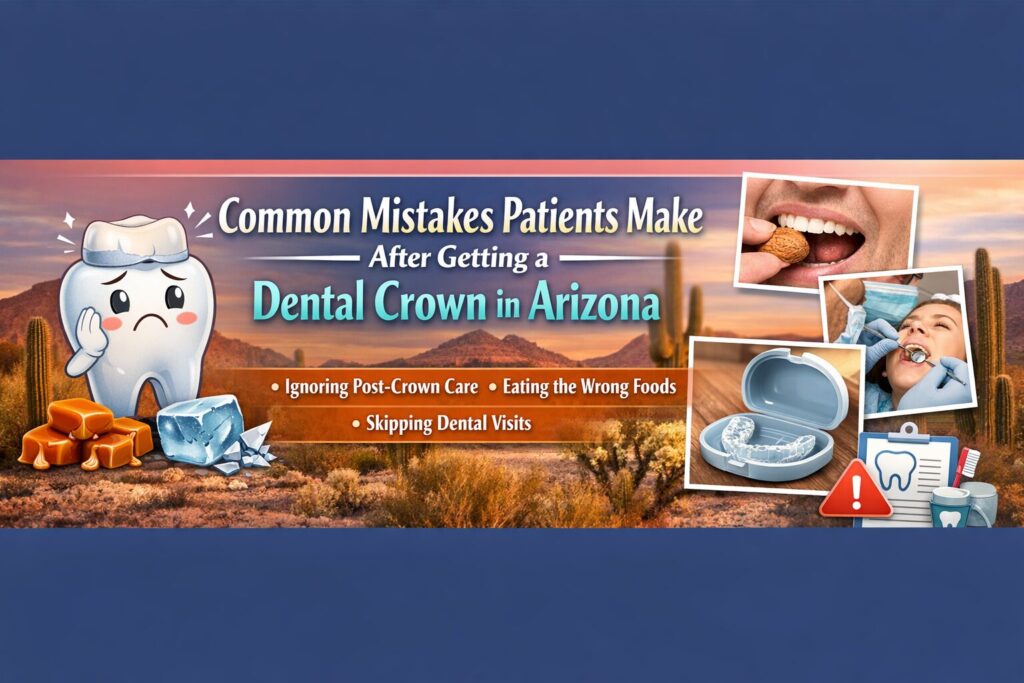
Common Mistakes Patients Make After Getting a Dental Crown in Arizona
Dental crowns are designed to restore strength, function, and appearance to damaged teeth. However, the long-term success of a dental crown does not depend only on the procedure itself. Many patients unintentionally make mistakes after crown placement that can lead to discomfort, damage, or premature failure. Understanding these common mistakes can help Arizona patients protect their crowns and maintain better oral health.
Ignoring Post-Crown Care Instructions
Not Following the Dentist’s Aftercare Guidelines
After receiving a dental crown, dentists provide specific instructions related to eating, oral hygiene, and activity levels. Ignoring these guidelines can increase the risk of sensitivity, irritation, or crown damage. These instructions are designed to help the crown settle properly and allow surrounding tissues to heal .
Misunderstanding Temporary vs. Permanent Crown Care
Temporary crowns are more fragile than permanent ones and can easily loosen or break if not handled carefully. Many patients treat temporary crowns like permanent restorations, which can lead to early failure before the final crown is placed. Extra care, such as chewing on the opposite side, is often recommended during this phase .
Skipping Recommended Follow-Up Appointments
Follow-up visits allow the dentist to check the fit, bite alignment, and gum response around the crown. Skipping these appointments may leave minor issues unresolved, increasing the risk of discomfort or crown complications over time .
Eating the Wrong Foods After Crown Placement
Consuming Hard or Crunchy Foods Too Soon
Hard foods such as nuts, ice, or hard candies can place excessive pressure on a newly placed crown. This pressure can cause cracks, chips, or damage, especially in porcelain crowns .
Eating Sticky or Chewy Foods That Can Loosen Crowns
Sticky foods like gum, caramel, or toffee can pull at the crown and weaken the bonding material. This increases the risk of the crown becoming loose or dislodged .
Biting Down on the Crown Before It Fully Settles
After crown placement, it may take some time for the bite to feel natural. Applying strong biting pressure too early can cause discomfort or uneven stress on the crown and surrounding teeth .
Poor Oral Hygiene Around the Crown
Neglecting Flossing Around the Crowned Tooth
Some patients avoid flossing near a crown due to fear of damaging it. However, plaque can still accumulate around the crown margins, increasing the risk of gum disease and decay beneath the crown .
Brushing Too Aggressively Near the Crown
Aggressive brushing can irritate the gums and affect the seal between the crown and the tooth. Using a soft-bristled toothbrush and gentle brushing techniques helps maintain both crown and gum health .
Assuming the Crown Cannot Get Decay
While crowns protect the visible portion of a tooth, the natural tooth structure underneath is still vulnerable. Poor hygiene can lead to decay at the gum line if proper cleaning is not maintained .
Delaying Treatment When Symptoms Appear
Ignoring Ongoing Pain or Sensitivity
Some sensitivity is normal after crown placement, but persistent pain may indicate issues such as bite misalignment or nerve irritation. Ignoring these symptoms can lead to more serious complications .
Overlooking Gum Irritation or Bleeding
Swelling, redness, or bleeding around a crowned tooth may signal inflammation or hygiene issues. Early evaluation helps prevent infection and long-term gum problems .
Waiting Too Long to Contact the Dentist
Many patients hope discomfort will resolve on its own. Delaying dental care often results in more extensive treatment needs that could have been avoided with early intervention .
Clenching or Grinding Teeth Without Protection
Unknowingly Grinding Teeth During Sleep
Teeth grinding, also known as bruxism, places excessive force on dental crowns. Over time, this can cause cracks, wear, or crown failure, even if the crown was properly placed .
Not Wearing a Recommended Night Guard
Dentists often recommend night guards to protect crowns in patients who grind their teeth. Ignoring this recommendation increases the risk of crown damage and discomfort .
Allowing Excessive Bite Pressure on the Crown
Uneven or excessive bite pressure can wear down a crown prematurely and affect nearby teeth. Proper bite evaluation helps reduce unnecessary stress on dental restorations .
Assuming Dental Crowns Do Not Require Maintenance
Believing Crowns Last Forever Without Care
Dental crowns are durable but not permanent. Their lifespan depends on oral hygiene habits, eating behaviors, and routine dental care .
Skipping Routine Dental Checkups
Regular dental visits help detect early signs of crown wear, loosening, or gum issues. Skipping checkups increases the likelihood of unexpected crown failure .
Ignoring Early Signs of Crown Wear or Loosening
Minor changes in how a crown feels can signal developing issues. Addressing these early helps avoid more extensive dental treatment later .
Not Paying Attention to Bite Alignment
Ignoring a Crown That Feels Too High
If a crown feels uneven when biting, it may need adjustment. A crown that sits too high can cause discomfort and excessive wear on both the crown and opposing teeth .
Allowing Uneven Bite Pressure Over Time
Uneven pressure can affect jaw comfort and crown stability. Proper alignment ensures balanced force distribution while chewing .
Failing to Get Bite Adjustments When Needed
Bite adjustments are a normal part of crown aftercare. Ignoring recommended adjustments can shorten the lifespan of the crown and affect overall oral health .
How Arizona Patients Can Avoid These Common Crown Mistakes
Developing Long-Term Crown Care Habits
Consistent brushing, flossing, and mindful eating habits are essential for maintaining crown health and comfort over time .
Knowing When to Seek Professional Dental Care
Patients should contact their dentist if they notice pain, sensitivity, looseness, or changes in bite after crown placement .
Maintaining Consistent Preventive Dental Visits
Routine dental checkups help ensure crowns remain secure, functional, and properly aligned with long-term oral health goals .