
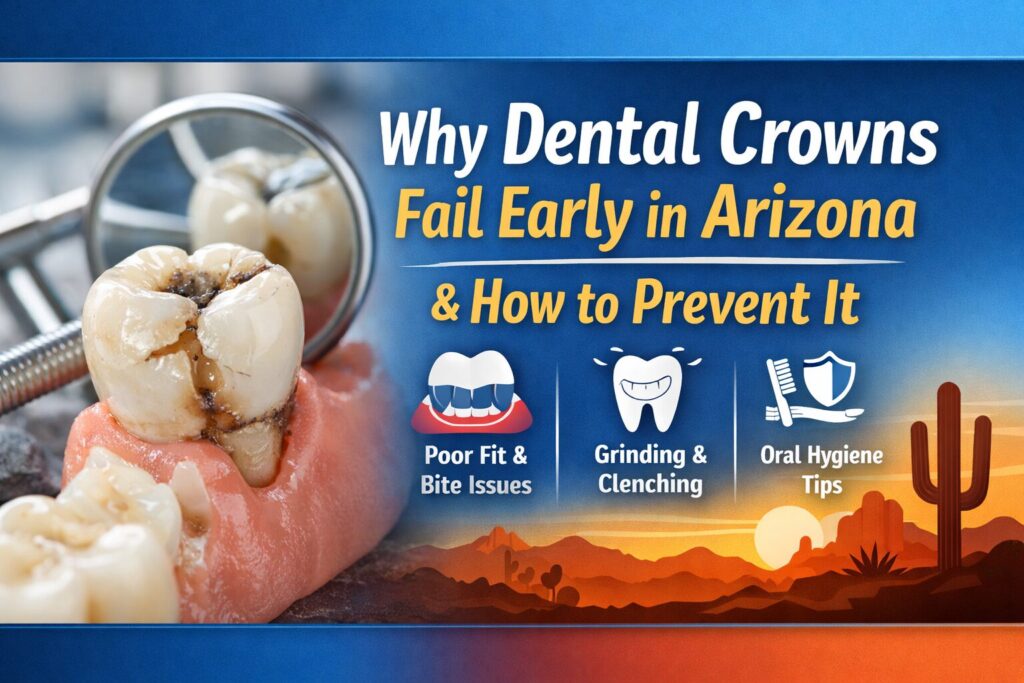
Why Some Dental Crowns Fail Early in Arizona and How to Avoid It
Arizona Dentists’ Perspective
Dental crowns are designed to restore strength, function, and appearance to damaged teeth. However, dentists in Arizona do see cases where crowns fail earlier than expected. These failures are rarely caused by a single issue. In most situations, early crown failure results from a combination of clinical factors, oral habits, material choices, and long term care.
This guide explains the most common reasons dental crowns fail early and how patients can reduce the risk, based on widely accepted dental knowledge and professional guidance.
Common Reasons Dental Crowns Fail Earlier Than Expected
Inadequate Tooth Preparation Before Crown Placement
Before placing a crown, the underlying tooth must be properly treated and prepared. If decay, cracks, or structural weakness remain, the crown may not have a stable foundation. Dentists note that untreated issues beneath a crown can continue to progress, eventually compromising the crown’s support .
Poor Fit or Improper Crown Margins
A crown must fit precisely along the tooth and gum line. If the margins are not sealed properly, bacteria can enter the area, increasing the risk of decay under the crown. Poor fit can also lead to bite problems and uneven pressure during chewing .
Issues With Dental Cement or Bonding
Dental cement plays a critical role in keeping the crown securely in place. Over time, cement can weaken, especially if it was not applied under ideal conditions or if excessive forces are placed on the crown. When bonding fails, crowns may loosen or fall off .
How Bite Forces and Daily Habits Affect Crown Longevity
Excessive Chewing Pressure and Bite Imbalance
Crowns are built to withstand normal chewing forces. However, uneven bite alignment or excessive pressure on a crowned tooth can stress both the crown and the tooth underneath. Dentists commonly identify bite imbalance as a contributing factor in early crown failure .
Teeth Grinding or Clenching Habits
Bruxism, which involves grinding or clenching teeth, places repeated pressure on crowns. Over time, this constant force can damage crown materials or weaken the bond holding the crown in place .
Using Teeth for Non Chewing Purposes
Using teeth to open packaging, bite hard objects, or chew ice can significantly increase the risk of cracking or loosening a crown. Dental professionals consistently advise against these habits to protect restorations .
Material Related Factors That Can Lead to Early Crown Failure
Choosing the Wrong Crown Material for the Tooth Location
Different areas of the mouth experience different levels of force. Certain materials may not be suitable for back teeth that handle heavy chewing. Selecting an inappropriate material can increase wear or fracture risk .
Wear and Tear of Certain Crown Materials
All crown materials experience gradual wear. Some materials may wear faster under constant pressure, especially in patients with grinding habits or strong bite forces .
Aesthetic Focus Over Functional Strength
In some cases, prioritizing appearance over durability can affect crown longevity. Dentists aim to balance aesthetics with strength to ensure long term success .
Role of Oral Hygiene in Crown Failure
Plaque Buildup Around Crown Edges
Crowns do not decay, but the natural tooth underneath still can. Plaque accumulation around crown margins can lead to decay that weakens the tooth and causes crown failure .
Gum Recession Exposing Crown Margins
Gum recession can expose the edge of a crown, making it easier for bacteria to reach vulnerable areas. This exposure increases the risk of decay and bonding issues over time .
Difficulty Cleaning Around Crowns
Crowns can sometimes make flossing or brushing more challenging. Without proper cleaning techniques, bacteria may build up in hard to reach areas .
Dentist Related Factors That Influence Crown Success
Accuracy of Crown Design and Placement
Precise design and placement are essential for crown durability. Crowns that are custom fitted to the patient’s bite and tooth shape are more likely to perform well long term .
Importance of Proper Occlusion Adjustment
After crown placement, dentists check how the crown contacts opposing teeth. Proper occlusion adjustment helps prevent excessive pressure that can damage the crown .
Experience and Technique of the Treating Dentist
Clinical experience and attention to detail play a major role in crown success. Proper planning, preparation, and follow up care reduce the risk of early failure .
Patient Related Factors That Increase Failure Risk
Ignoring Post Treatment Care Instructions
Dentists provide specific care instructions after crown placement. Ignoring these guidelines can increase the risk of damage, loosening, or decay .
Delaying Follow Up Dental Visits
Regular dental visits allow early detection of crown issues. Delaying follow ups can allow small problems to become serious failures .
Continuing Habits That Stress the Crown
Habits such as nail biting, grinding, or chewing hard foods place unnecessary stress on crowns and shorten their lifespan .
How Arizona Dentists Help Prevent Early Crown Failure
Thorough Evaluation Before Recommending a Crown
Dentists carefully examine tooth structure, bite alignment, and oral health before recommending a crown to ensure it is the right solution .
Customizing Crown Choice Based on Patient Needs
Crown material, design, and placement are selected based on the patient’s bite, habits, and tooth location to improve longevity .
Monitoring Crown Performance Over Time
Routine dental checkups allow dentists to monitor crowns for wear, looseness, or changes in bite, helping prevent unexpected failure .
Signs That a Dental Crown May Be Failing
Persistent Sensitivity or Discomfort
Ongoing sensitivity can indicate issues such as decay under the crown, bonding problems, or bite stress .
Looseness or Movement in the Crown
A crown that feels loose may signal cement failure or changes in the supporting tooth structure .
Visible Changes Around the Crown Area
Cracks, chips, dark lines near the gums, or swelling can be warning signs that require dental evaluation .
How to Avoid Early Dental Crown Failure
Following Proper Oral Care Routines
Consistent brushing and flossing around crowned teeth help protect the underlying tooth and surrounding gums .
Addressing Bite or Grinding Issues Early
Managing bite problems and grinding habits reduces stress on crowns and helps extend their lifespan .
Seeking Prompt Dental Attention for Any Changes
Early evaluation of discomfort, looseness, or sensitivity allows dentists to correct issues before crown failure occurs .
Final Thoughts From Arizona Dentists
Long Term Crown Success Depends on Planning and Care
Dental crown longevity depends on careful preparation, appropriate material selection, and consistent oral care .
Early Attention Helps Prevent Costly Repairs or Replacement
Addressing small issues early often prevents the need for complex procedures or crown replacement later.
Howdy! Someone in my Myspace group shared this site with us so I came
to take a look. I’m definitely enjoying the information. I’m bookmarking and will be tweeting
this to my followers! Great blog and wonderful design and style.