
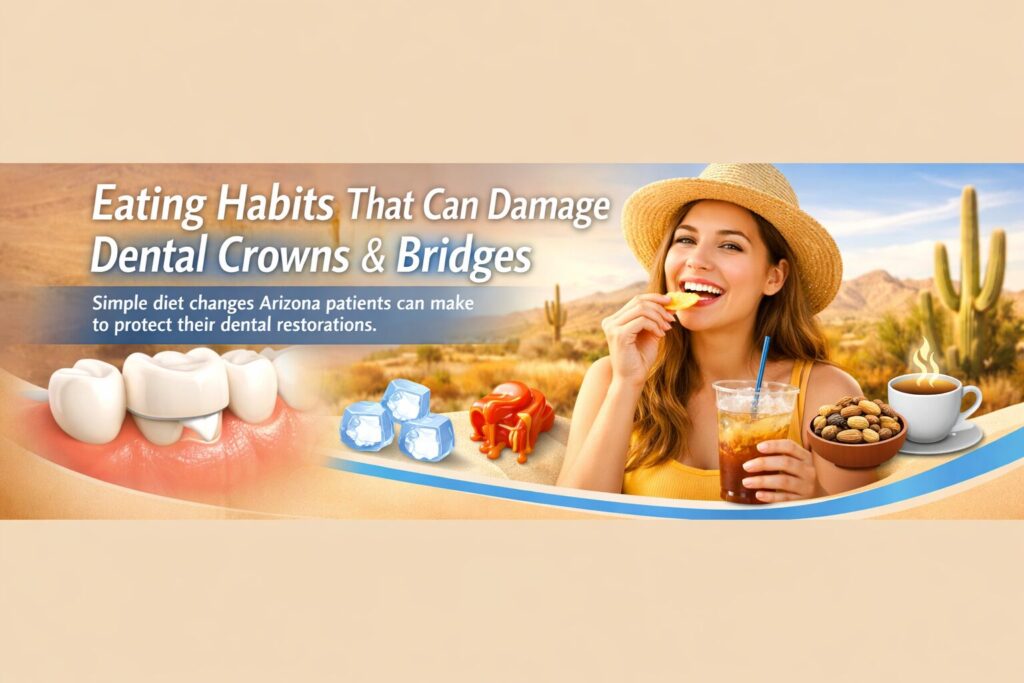
Eating Habits in Arizona That Can Damage Crowns and Bridges
Dental crowns and bridges are designed to restore strength, function, and appearance to damaged or missing teeth. While these restorations are durable, everyday eating habits can place unnecessary stress on them. Certain food choices and behaviors, especially when repeated over time, can lead to discomfort, damage, or reduced lifespan of crowns and bridges. Understanding these habits can help Arizona patients protect their dental restorations.
Consuming Hard and Crunchy Foods Regularly
Chewing Ice in Hot Arizona Weather
In Arizona’s warm climate, many people chew ice to cool down. This habit places extreme pressure on crowns and bridges and can cause cracks or chipping over time.
Eating Hard Snacks and Candies
Hard foods such as nuts, hard candies, and crunchy snacks require strong biting force. When chewed directly on crowned or bridged teeth, they can damage the restoration or weaken its bond.
Biting Directly With Crowned or Bridged Teeth
Using restored teeth to bite into hard foods like raw vegetables or crusty bread increases stress on the crown or bridge and may contribute to long term wear.
Frequent Consumption of Sticky or Chewy Foods
Eating Caramel, Taffy, and Gummy Candies
Sticky foods can cling to crowns and bridges and pull on them while chewing. Over time, this can increase the risk of loosening or displacement.
Chewing Gum for Extended Periods
Frequent gum chewing places repeated pressure on dental restorations. Sticky gum can also attach to the edges of crowns and bridges, affecting their stability.
Snacking on Dried Fruits or Chewy Treats
Dried fruits and chewy snacks may seem harmless, but their sticky texture can stress crowns and bridges and make cleaning more difficult.
Eating Very Hot or Very Cold Foods Back to Back
Temperature Sensitivity Around Restorations
Crowns and bridges can be sensitive to extreme temperatures, especially soon after placement. Very hot or cold foods may cause discomfort.
Alternating Between Hot and Cold Beverages
Switching quickly between hot and cold drinks can increase sensitivity and place thermal stress on dental restorations.
Neglecting Sensation Changes While Eating
Ignoring sensitivity or discomfort while eating extreme foods may allow minor issues to worsen over time.
Using Teeth as Tools While Eating
Opening Food Packaging With Teeth
Using teeth to tear open wrappers or packaging applies abnormal force to crowns and bridges and can weaken them.
Biting Bones, Pits, or Hard Food Objects
Accidentally biting down on bones or fruit pits can damage crowns or compromise bridge stability.
Tearing Food Instead of Cutting It Properly
Pulling or tearing tough foods with teeth instead of cutting them into smaller pieces increases strain on dental restorations.
Frequent Snacking Without Proper Oral Care
Constant Snacking Throughout the Day
Frequent snacking increases the amount of food debris around crowns and bridges, which can irritate gums if not cleaned properly.
Not Rinsing or Cleaning After Meals
Failing to rinse or brush after meals allows food particles to collect around restoration margins.
Late Night Eating Without Brushing
Eating before bed without brushing leaves residue on teeth and restorations overnight, increasing the risk of dental issues.
Eating Habits That Put Uneven Pressure on Bridges
Favoring One Side While Chewing
Chewing mostly on one side of the mouth places uneven pressure on bridges and supporting teeth, leading to faster wear.
Biting Down Forcefully While Eating
Aggressive chewing or biting puts excessive stress on bridges and can weaken their structure over time.
Ignoring Discomfort or Bite Changes
Discomfort while chewing or changes in bite alignment should not be ignored, as they may indicate stress on the bridge.
How Arizona Patients Can Protect Crowns and Bridges Through Better Eating Habits
Choosing Crown and Bridge Friendly Foods
Selecting softer foods and cutting harder items into smaller pieces helps reduce stress on restorations.
Being Mindful of Food Texture and Temperature
Paying attention to how food texture and temperature affect comfort can help prevent damage and sensitivity.
Maintaining Regular Dental Checkups
Routine dental visits allow early detection of wear or alignment issues, helping crowns and bridges last longer.