
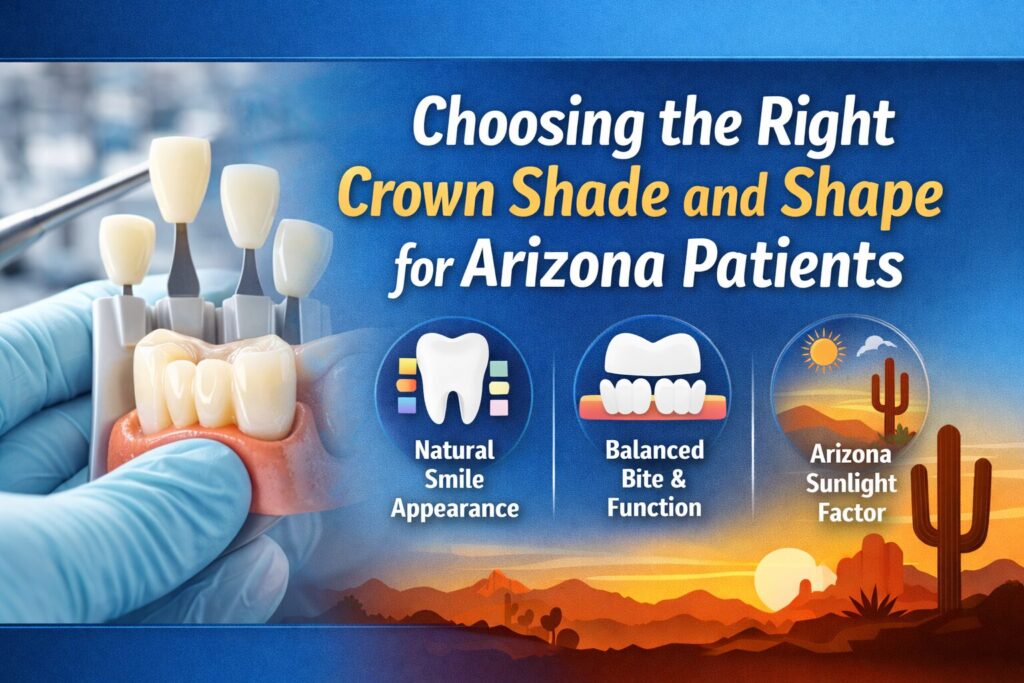
Choosing the Right Crown Shade and Shape for Arizona Patients
What Dentists Actually Consider
Choosing a dental crown is not only about fixing a damaged tooth. Dentists carefully evaluate shade and shape so the crown looks natural, functions correctly, and lasts for years. From a dentist’s perspective, these decisions are based on clinical principles, patient-specific factors, and proven restorative dentistry practices. This guide explains what dentists actually consider when selecting crown shade and shape, using established dental knowledge and trusted professional sources.
Why Crown Shade and Shape Matter More Than Patients Realize
Impact on Natural Smile Appearance
Dentists aim to match a crown so it blends seamlessly with surrounding teeth. Crown shade selection focuses on lightness, color tone, and saturation to avoid a crown that appears too white or mismatched. Proper shade matching helps the crown look like a natural part of the smile rather than a visible dental restoration.
Role in Bite Balance and Chewing Comfort
Crown shape directly affects how upper and lower teeth come together. If the shape is incorrect, chewing forces may be uneven, which can cause discomfort and stress on the crown and nearby teeth. Dentists design crown contours to support a balanced and comfortable bite.
Long Term Satisfaction With the Crown
A crown that looks natural and feels comfortable leads to higher patient satisfaction. When shade and shape are planned carefully, patients are more likely to feel confident smiling and experience fewer functional issues over time.
How Dentists Determine the Right Crown Shade
Matching Crown Shade With Natural Tooth Color
Dentists use standardized dental shade guides to compare crown materials with natural teeth. The process usually starts by matching brightness first, followed by fine adjustments to color tone so the crown closely resembles adjacent teeth.
Considering Skin Tone and Smile Line
In cosmetic cases, dentists consider how the crown will appear within the full smile. Lip movement, smile width, and facial features are reviewed to ensure the shade looks natural when the patient speaks or smiles.
Effect of Lighting Conditions During Shade Selection
Shade selection is often done under natural or color-corrected lighting. Artificial lighting can distort color perception, so dentists prefer lighting conditions that mimic everyday environments to achieve accurate shade matching.
Factors That Influence Crown Shape Selection
Shape Based on Tooth Position in the Mouth
Front teeth and back teeth serve different purposes. Dentists design crown shape based on the tooth’s role in biting, chewing, and appearance, ensuring it matches the natural anatomy of that specific tooth.
Alignment With Adjacent and Opposing Teeth
A crown must fit harmoniously with surrounding teeth. Proper alignment helps prevent food traps, improves chewing efficiency, and supports long term oral health.
Supporting Proper Speech and Function
Tooth shape influences speech, especially for front teeth. Dentists shape crowns carefully to maintain natural airflow and sound production during speech.
Arizona Specific Considerations Dentists Take Into Account
High Sunlight and Its Effect on Tooth Appearance
In bright environments, including sunny regions like Arizona, tooth color can appear different under strong natural light. Dentists consider how a crown shade will look outdoors as well as indoors.
Patient Lifestyle and Outdoor Exposure
Lifestyle factors such as frequent outdoor activities can affect how patients perceive crown color. Dentists factor in daily environments so the crown looks natural in real life settings.
Cosmetic Expectations of Arizona Patients
Many patients seek crowns that appear natural rather than overly white. Dentists discuss expectations in advance to align aesthetic goals with realistic, long lasting results.
Role of Facial Features in Crown Design
Smile Width and Lip Movement
Dentists observe how much tooth structure is visible when smiling or talking. Crown shape is adjusted so it complements natural lip movement and smile width.
Facial Symmetry and Proportions
The crown should not stand out from the rest of the face. Dentists aim for harmony between the crown, the smile, and overall facial proportions.
Age Related Changes Dentists Consider
Natural teeth often darken or wear slightly with age. Dentists may recommend shades and shapes that reflect these natural changes for a more realistic appearance.
Functional Factors Dentists Never Ignore
Bite Force and Jaw Movement
Dentists analyze how forces move through the jaw during chewing. Crown shape is designed to distribute pressure evenly and reduce stress on the restoration.
Preventing Excess Pressure on the Crown
Uneven pressure can shorten a crown’s lifespan. Proper shaping of the biting surface helps protect both the crown and the underlying tooth.
Ensuring Long Term Structural Stability
A well-shaped crown supports the surrounding teeth and gums, helping maintain overall bite stability and oral function.
Material Choice and Its Effect on Shade and Shape
How Different Materials Reflect Light
Crown materials vary in translucency and light reflection. Some materials mimic natural enamel more closely, which influences final shade selection.
Thickness Requirements of Crown Materials
Certain materials require specific thickness for strength. Dentists account for this when designing crown shape so durability is not compromised.
Balancing Aesthetics With Strength
Dentists balance appearance and function. A crown must look natural while still being strong enough to withstand daily chewing forces.
Common Mistakes Patients Make When Choosing Crown Shade or Shape
Selecting Shade Without Dentist Guidance
Choosing an extremely white shade without professional advice can result in a crown that looks unnatural compared to surrounding teeth.
Prioritizing Whiteness Over Natural Look
Dentists focus on blending, not brightness. A natural looking crown usually matches nearby teeth rather than standing out.
Ignoring Functional Recommendations
A crown that looks good but does not function properly can lead to discomfort or long term issues. Dentists emphasize function alongside aesthetics.
How Dentists Customize Crowns for Individual Patients
Digital Scanning and Smile Analysis
Modern dentistry uses digital scans to capture accurate tooth shape and color, improving customization and fit.
Trial Adjustments Before Final Placement
Dentists may evaluate temporary crowns or make adjustments before final placement to confirm shade and shape accuracy.
Collaboration With Dental Laboratories
Clear communication between dentists and dental labs ensures the crown is fabricated according to precise clinical and aesthetic requirements.
Final Thoughts From Arizona Dentists
A Natural Looking Crown Requires Planning and Precision
Successful crown outcomes depend on careful planning, accurate shade selection, and thoughtful shape design.
Dentist Expertise Plays a Key Role in Final Results
Experience and attention to detail allow dentists to create crowns that look natural, feel comfortable, and perform reliably over time.