
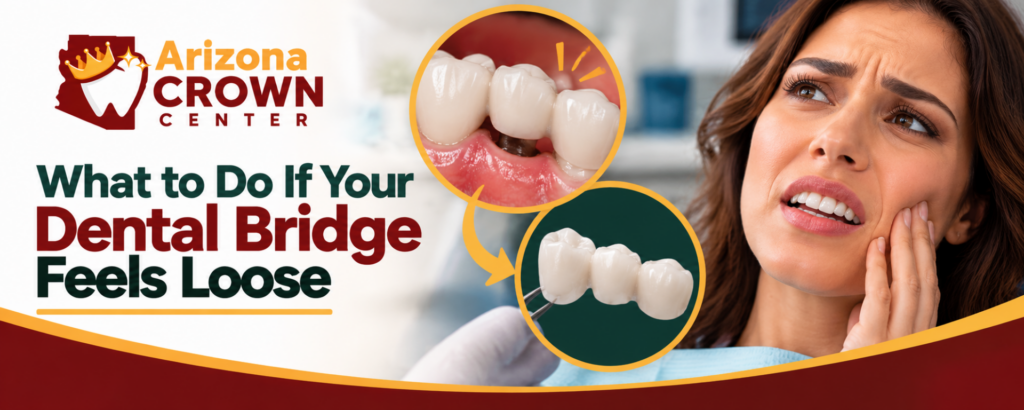
What Should You Do If Your Dental Bridge Feels Loose?
If your dental bridge feels loose, shifts when you bite, or seems to move when you touch it with your tongue, contact a dentist promptly. A bridge can loosen because the dental cement has failed, a supporting tooth has developed decay or damage, or the gums and bone supporting the teeth have changed. You cannot reliably identify the cause at home, and waiting may allow the problem to worsen.
Until you receive professional advice, avoid chewing on the affected side, do not pull or wiggle the bridge, and keep the area gently clean. Do not try to secure it with household glue or other non-dental adhesives. If the bridge comes out completely, place it in a clean container and ask the dental office how to bring it to your appointment.
Contact Your Dentist Promptly
Call your dentist and explain whether the bridge is moving, partly detached, completely out, painful, or affecting your bite. The office can advise how soon you should be assessed. Seek more urgent care if you have significant pain, swelling, fever, or signs of infection. If swelling affects your breathing or swallowing, seek emergency medical help.
Avoid Chewing on the Affected Side
Choose soft foods if you need to eat before your appointment, and chew on the opposite side if comfortable. Avoid sticky foods, hard foods, chewing ice, and anything that could pull on or fracture the bridge. If chewing causes pain or the bridge moves noticeably, stop eating on that side.
Keep the Area Clean
Brush gently around the bridge and nearby teeth. Clean carefully without forcing floss or other tools under a bridge that is moving. If the bridge has come out, keep the exposed area clean and follow the dentist’s instructions. Do not attempt to push a loose bridge back into place.
What to Do If Your Bridge Falls Out
Handle the bridge carefully and store it in a clean, closed container so you can take it to the dentist. Do not wrap it in a tissue where it could be accidentally discarded. Do not attempt to glue it back in. A dentist needs to check the bridge and the supporting teeth before deciding whether it can be safely reattached.
Why You Should Never Use Household Glue
Household superglue and other non-dental adhesives are not designed for use inside the mouth. They can irritate oral tissues, make professional treatment more difficult, and fail to hold the bridge safely. Do not use glue, craft adhesive, or a home repair product to secure a dental bridge.
Why Does a Dental Bridge Become Loose?
A dental bridge replaces one or more missing teeth and is usually supported by natural teeth or dental implants, depending on the type of restoration. A traditional fixed bridge is commonly held in place by crowns on supporting teeth. If the cement, bridge, supporting teeth, or surrounding tissues are compromised, the restoration may loosen.
Weakened Dental Cement
The cement that holds a bridge in place can weaken over time or lose its seal. This may allow movement, food to collect around the restoration, or bacteria to reach the supporting tooth. A dentist can assess whether the bridge is intact and whether the supporting teeth are healthy enough for recementing.
Decay Around a Supporting Tooth
Tooth decay can develop near the edge of a crown supporting a bridge, especially if plaque collects around the margins or cleaning is difficult. Decay can undermine the tooth and affect how securely the bridge fits. If decay is present, simply recementing the bridge may not address the underlying problem.
Damage to the Bridge or Supporting Teeth
A bridge may loosen if the restoration cracks, chips, or becomes damaged. A supporting tooth can also develop a crack or fracture. The dentist may examine the bridge and teeth and take dental X-rays when appropriate to understand what is happening beneath the visible surface.
Gum Disease and Changes in Tooth Support
The health of the gums and supporting bone matters, particularly when natural teeth support the bridge. Gum disease can damage the tissues around teeth and may contribute to mobility. Bleeding gums, swelling, persistent bad breath, or a change in how the teeth fit together should be assessed by a dental professional.
Grinding, Bite Pressure, or Injury
Clenching, grinding, a sudden impact, or unusually heavy bite pressure may place stress on a bridge and its supporting teeth. If you grind your teeth, ask your dentist whether a professionally fitted night guard or another approach is suitable for you.
How Can You Tell If Your Dental Bridge Is Loose?
Movement, Clicking, or a Change in Fit
You may notice that the bridge shifts slightly, clicks when you bite, or feels different from the way it used to. Do not repeatedly test the movement with your fingers or tongue. Even slight movement deserves a dental assessment because the cause may not be visible.
Pain or Sensitivity When Biting
Discomfort when chewing, sensitivity around a supporting tooth, or a feeling that your bite has changed can indicate a problem with the bridge or the tooth underneath it. These symptoms are not specific to bridge loosening, so a dental examination is needed to identify the cause.
Gum Irritation, Bleeding, or an Unusual Taste
Inflamed gums, trapped food, an unpleasant taste, or persistent bad breath can occur when a bridge no longer fits securely or when decay or gum disease is present. These signs do not prove that the bridge is loose, but they should not be ignored.
Can a Bridge Be Loose Without Pain?
Yes. A bridge can loosen without causing noticeable pain, particularly early on. The absence of pain does not confirm that the bridge or its supporting teeth are healthy. Arrange a dental assessment if you notice movement, a change in fit, or another new symptom.
Is a Loose Dental Bridge a Dental Emergency?
A loose bridge needs prompt professional advice, but the level of urgency depends on your symptoms and circumstances. Call your dental office for guidance rather than trying to manage the problem yourself.
When to Contact a Dentist
Contact a dentist as soon as you notice movement, a change in your bite, pain when chewing, or a bridge that has partly or completely detached. Mention any swelling, fever, bleeding, or recent injury when you call. If you cannot reach your regular dentist, ask about an urgent dental appointment.
Symptoms That Need Urgent Assessment
Significant or worsening pain, facial swelling, pus, fever, or a recent injury involving the teeth warrants urgent assessment. A loose bridge may not be the only problem, and the underlying tooth or surrounding tissues may need treatment.
When Swelling or Breathing Difficulty Requires Emergency Help
Facial or mouth swelling that is rapidly worsening, or swelling accompanied by difficulty breathing or swallowing, requires emergency medical attention. Do not wait for a routine dental appointment if breathing or swallowing is affected.
Can a Loose Dental Bridge Be Repaired?
Not every loose dental bridge needs to be replaced. Treatment depends on why it loosened, whether the bridge is damaged, and whether the supporting teeth and gums are healthy. A dentist must examine the restoration before recommending the right option.
When Recementing May Be Possible
If the bridge is intact, fits correctly, and the supporting teeth are healthy, the dentist may be able to clean the area and recement it. Recementing is not appropriate for every case. The dentist will first check for decay, fractures, damage, or other issues that could make reattachment unreliable.
When the Supporting Tooth Needs Treatment
If a supporting tooth has decay, a crack, or another problem, it may need treatment before the bridge can be secured again. The treatment varies depending on the tooth’s condition. The dentist will explain the findings and discuss suitable options after examination.
When a Bridge May Need Repair or Replacement
A bridge may need repair or replacement if it is cracked, no longer fits properly, or cannot be supported predictably by the teeth underneath it. If the supporting teeth have extensive damage or gum disease, those issues must also be considered. Your dentist can explain the benefits, limitations, likely steps, and expected costs of each option.
What to Expect During a Dental Examination
The dentist will ask when the bridge began to feel loose and whether you have pain, sensitivity, swelling, or a recent injury. They may inspect the bridge, check the supporting teeth and gums, assess your bite, and take X-rays if needed. The findings help determine whether recementing, treatment of a supporting tooth, or a new restoration is appropriate.
Can You Eat With a Loose Dental Bridge?
It is safest to avoid chewing directly on a loose bridge until a dentist has assessed it. If you eat, choose soft foods that do not require forceful biting, and stop if you experience pain or movement. Avoid hard, crunchy, chewy, or sticky foods that could pull on the bridge or damage it.
How to Protect the Area Until Your Appointment
Keep brushing gently and follow any instructions given by your dental office. Do not use sharp objects to remove food, and do not try to adjust the bridge yourself. If the bridge detaches, keep it safe in a clean container and contact the dentist for advice.
How Much Does Loose Dental Bridge Repair Cost?
The cost of treating a loose dental bridge varies by location and by what the dentist finds. A straightforward recementing may cost less than treating decay or replacing a damaged bridge, but the exact fee cannot be determined without an examination and a treatment plan.
Factors That Affect Treatment Cost
Costs can depend on whether the bridge is intact, whether supporting teeth need treatment, whether X-rays or other diagnostic steps are needed, and whether the restoration can be reused. Insurance benefits and the materials used may also affect your out-of-pocket expense.
Repair Versus Replacement
Ask the dental office to explain the recommended treatment, why it is needed, what alternatives exist, and whether the estimate includes all expected steps. If replacement is recommended, ask why recementing or repair is not suitable. A clear treatment plan helps you compare options without delaying necessary care.
How Can You Prevent Your Dental Bridge From Becoming Loose?
Clean Under and Around the Bridge
Brush twice daily with fluoride toothpaste and clean carefully around the bridge. A floss threader, bridge floss, or an appropriately sized interdental brush may help clean beneath the replacement tooth. Ask your dentist or hygienist to demonstrate the method that suits your bridge and gum health.
Protect the Supporting Teeth and Gums
Regular dental checkups help your dental team monitor the bridge, the supporting teeth, and your gums. Report bleeding, swelling, sensitivity, a bad taste, or a change in fit rather than waiting for your next routine visit.
Manage Teeth Grinding
If you clench or grind your teeth, discuss it with your dentist. They can assess wear patterns and whether a custom night guard or another treatment is appropriate. Avoid chewing ice or using your teeth to open packages, as these habits can damage dental restorations.
Schedule Regular Dental Checkups
Routine professional care allows potential problems to be identified before they become more complicated. Your dentist can recommend an appropriate checkup schedule based on your oral health, the type of bridge you have, and any history of dental disease.
Dental Bridge Care in Arizona
If your dental bridge feels loose, a dental evaluation can help determine whether the restoration can be recemented or whether the supporting teeth need attention. AZ Crown Center provides information about crown and bridge procedures and its Arizona locations. Review the practice’s procedure information and location details to learn more.
Learn more: Dental Crown and Bridge Procedure in Arizona | AZ Crown Center Locations
Frequently Asked Questions
Can a loose dental bridge tighten up on its own?
No. A bridge that has become loose should not be expected to tighten up on its own. Contact a dentist to find out why it is moving and whether it needs recementing, repair, or another treatment.
Can a dentist recement a loose dental bridge?
Sometimes. Recementing may be possible if the bridge is intact, fits correctly, and the supporting teeth are healthy. If decay, fractures, or other problems are present, those issues may need treatment first.
Can I glue my dental bridge back in at home?
No. Do not use household glue or try to force the bridge into place. These products are not designed for oral use and can complicate treatment. Keep a detached bridge in a clean container and contact your dentist.
How soon should I see a dentist for a loose bridge?
Contact your dentist promptly when you notice movement or a change in fit, even if it does not hurt. Severe pain, swelling, fever, or injury may require urgent assessment. Difficulty breathing or swallowing with swelling is an emergency.
Does every loose dental bridge need replacement?
No. Some bridges can be recemented if they are intact and the supporting teeth are healthy. Others need repair or replacement because of damage, decay, or problems with the supporting teeth. An examination is needed to decide.
Conclusion
A loose dental bridge is a reason to contact your dentist, even if you have no pain. Avoid chewing on it, keep the area gently clean, and never use household glue or try to force the bridge back into place. The right treatment depends on the condition of the bridge and its supporting teeth. A dental examination can help determine whether recementing, repair, or replacement is the safest option.