
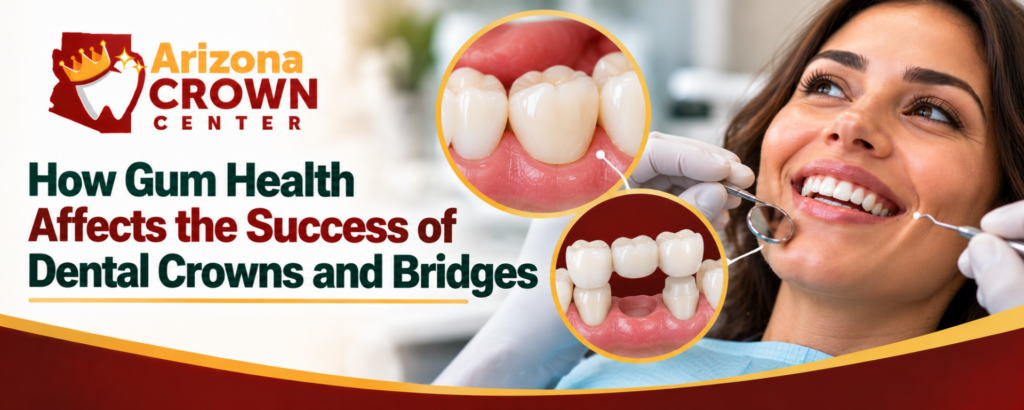
How Gum Health Affects the Success of Dental Crowns and Bridges
Dental crowns and bridges can restore damaged or missing teeth, but the health of the gums supporting those restorations is an important part of long-term oral health. Even a well-made crown or bridge depends on healthy surrounding tissues and good daily oral hygiene.
If you are considering a dental crown or bridge in Arizona, understanding the connection between gum health and dental restorations can help you protect your smile and recognize problems early.
Why Gum Health Matters for Dental Restorations
Your gums help support and protect the teeth around a dental restoration. When gums become inflamed or infected, the tissues surrounding the teeth can become unhealthy.
The American Dental Association notes that bridges replace missing teeth and are supported by surrounding teeth or, in some cases, dental implants. Keeping the remaining teeth healthy is therefore an important part of maintaining a bridge.
Gum problems can also affect the overall environment around a crown or bridge. Plaque that remains along the gumline can contribute to inflammation and other oral health problems.
What Happens When Plaque Builds Up Around a Crown or Bridge?
A crown covers a damaged tooth, but it does not make the tooth or surrounding gum tissue immune to plaque.
Plaque can collect around the edge of a crown, between neighboring teeth, and around other areas that are difficult to clean. If plaque is not removed regularly, it can contribute to gum inflammation and tooth decay.
The tooth underneath a crown can still develop decay. Good brushing and flossing habits remain important even after a tooth has been restored.
For bridges, cleaning can require additional attention because artificial teeth can create areas where food and plaque may collect.
Signs Your Gums May Need Attention
Healthy gums generally should not remain swollen, tender, or frequently bleed during normal brushing or flossing.
Contact your dentist if you notice:
- Persistent gum bleeding
- Swollen or red gums
- Tenderness around a crown or bridge
- Changes in the way a restoration feels
- Food repeatedly becoming trapped around a restoration
- Persistent bad breath or an unpleasant taste
- A crown or bridge that feels loose
These symptoms do not automatically mean your crown or bridge has failed. However, they are reasons to have your mouth evaluated by a dental professional.
Can Gum Disease Affect a Dental Crown or Bridge?
A crown itself does not prevent gum disease. The surrounding teeth and gum tissues still require regular care.
For a bridge, the supporting teeth are particularly important because they help hold the restoration in place. The American Dental Association emphasizes that the success of a bridge depends on its foundation and that remaining teeth should be kept healthy and strong.
If gum health is poor, your dentist may need to address the underlying oral health issue before placing or replacing a restoration.
How to Protect Your Gums Around a Crown or Bridge
A consistent oral hygiene routine is one of the simplest ways to protect the teeth and gums around your restoration.
Brush Twice a Day
Brush your teeth gently at least twice a day using fluoride toothpaste. Pay attention to the gumline and the areas surrounding your crown or bridge.
The ADA recommends regular brushing and other preventive oral care to help maintain oral health.
Clean Between Your Teeth
Flossing or another dentist-recommended interdental cleaning method can help remove plaque from areas your toothbrush cannot reach.
If you have a dental bridge, ask your dentist which cleaning method is appropriate for the area underneath and around the bridge.
Keep Regular Dental Appointments
Professional dental examinations allow your dentist to check your gums, remaining teeth, and dental restorations.
Regular visits can also help identify problems before they become more complicated.
Pay Attention to Changes
A crown or bridge may feel normal for years, but changes should not be ignored. Bleeding, swelling, sensitivity, discomfort, or movement around a restoration can indicate that an examination is appropriate.
What If Your Gums Are Not Healthy Before a Crown or Bridge?
Your dentist may recommend treating gum problems before completing restorative treatment.
The appropriate approach depends on the condition of your gums, teeth, bone, and existing restorations. A dental examination can help determine whether the supporting teeth and surrounding tissues are suitable for the planned restoration.
The National Library of Medicine explains that choosing a replacement option depends on factors such as the health of neighboring teeth, the size and location of the gap, and the overall condition of the mouth.
When Should You See a Dentist?
Do not wait for severe discomfort before scheduling an appointment.
Consider contacting your dentist if you have persistent bleeding gums, swelling, pain, a loose restoration, or changes around an existing crown or bridge.
Early evaluation can help determine whether the issue involves the gums, the supporting tooth, the restoration, or another oral health problem.
Protect Your Investment in Your Smile
Dental crowns and bridges can play an important role in restoring damaged or missing teeth, but the restoration is only one part of maintaining a healthy smile.
Healthy gums, clean teeth, regular dental examinations, and proper home care all contribute to maintaining your oral health. If you have a crown or bridge in Arizona and notice changes around it, schedule an evaluation with your dentist rather than trying to diagnose the problem yourself.