
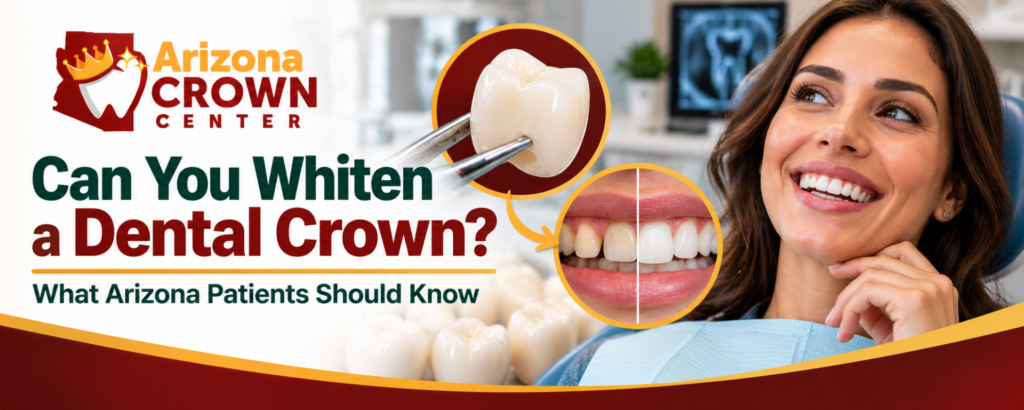
Can You Whiten a Dental Crown? What Arizona Patients Should Know
If you have dental crowns and are considering professional teeth whitening, you may wonder whether the crown will become whiter along with your natural teeth.
The short answer is that traditional teeth-whitening treatments are designed to change the color of natural tooth structure. A dental crown is a restoration, so it does not respond to whitening in the same way natural teeth do.
This is an important consideration if you want your smile to have a consistent shade after whitening.
Do Dental Crowns Whiten?
Generally, whitening products are intended to lighten natural tooth structure rather than change the color of an existing crown.
Dental crowns are custom restorations made from materials such as ceramics, porcelain, metals, or other dental materials. Their purpose can include restoring the shape, strength, and appearance of a damaged tooth.
Because a crown is not natural enamel, whitening treatment should not be expected to change its shade in the same way it changes natural teeth.
What Happens If Your Natural Teeth Become Whiter?
Suppose you already have a dental crown and decide to whiten your natural teeth.
Your natural teeth may become lighter while the existing crown remains approximately the same shade. This can make the crown appear darker or more noticeable compared with the surrounding teeth.
The difference may be especially noticeable when the crown is located toward the front of your smile.
That is why discussing your restoration history with your dentist before whitening can be helpful.
Should You Whiten Before Getting a New Crown?
If you are planning to replace an existing front-tooth crown and are also interested in whitening your natural teeth, ask your dentist about the order of treatment.
In some situations, whitening may be considered before the shade of a new crown is selected. This gives the dentist the opportunity to evaluate the shade of the natural teeth before designing the restoration.
The final treatment plan depends on your teeth, existing restorations, oral health, and cosmetic goals.
Can a Dentist Match a New Crown to Whitened Teeth?
A dentist can select a shade for a new crown based on the appearance of your natural teeth at the time the restoration is planned.
Dental crowns are custom-made restorations, and appearance is one of the factors considered when designing them.
If you are planning to whiten your teeth, tell your dentist before the crown is made. This is particularly important when the crown will be visible when you smile.
What About Whitening Toothpaste?
Whitening toothpaste can help remove certain surface stains, but it should not be viewed as a way to change the shade of an existing crown.
A crown’s color is part of the restoration itself. If you are unhappy with the appearance of a crown, professional evaluation is more appropriate than repeatedly using stronger whitening products.
Your dentist can determine whether the concern is related to surface staining, the crown material, the shade selection, or the condition of the restoration.
Can an Existing Crown Be Professionally Whitened?
An existing crown generally cannot simply be bleached like a natural tooth.
If the crown has become noticeably different from the surrounding teeth, your dentist can examine it and discuss available options.
Depending on the situation, the dentist may recommend professional cleaning, replacement of the restoration, or another approach. The correct solution depends on why the crown looks different and whether the underlying tooth is healthy.
What If Your Crown Looks Darker Than Your Natural Teeth?
A darker-looking crown does not necessarily mean there is a problem with the restoration.
The difference may result from:
- Natural teeth becoming lighter over time
- Changes in the surrounding teeth
- Staining on natural teeth
- The original shade selected for the crown
- Changes in lighting or appearance
- Wear or changes involving the restoration
A dental examination can help identify the reason for the color difference.
What Should You Tell Your Dentist Before Whitening?
Before starting a whitening treatment, let your dentist know if you have:
- Dental crowns
- Bridges
- Veneers
- Dental implants
- Large fillings
- Other visible restorations
This information helps your dentist consider how whitening may affect the overall appearance of your smile.
The American Dental Association explains that crowns can also be used to cover dental implants and to restore damaged teeth, making it important to consider existing restorations when planning cosmetic treatment.
Is Teeth Whitening Right for Everyone?
Whitening is not automatically appropriate for every person or every dental situation.
Before cosmetic whitening, your dentist can evaluate your teeth and gums and determine whether there are dental issues that should be addressed first.
For example, if you have untreated decay, gum problems, significant tooth sensitivity, or concerns involving an existing restoration, your dentist may recommend addressing those issues before cosmetic treatment.
The Bottom Line
Dental crowns are designed to restore and protect teeth, but they do not whiten like natural teeth.
If you are considering teeth whitening and have a visible dental crown, speak with your dentist before beginning treatment. Planning the timing of whitening and crown treatment can help you achieve a more consistent-looking smile.
If you are in Arizona and are considering whitening or replacing a visible dental crown, a dental consultation can help you understand which option makes sense for your specific smile.