
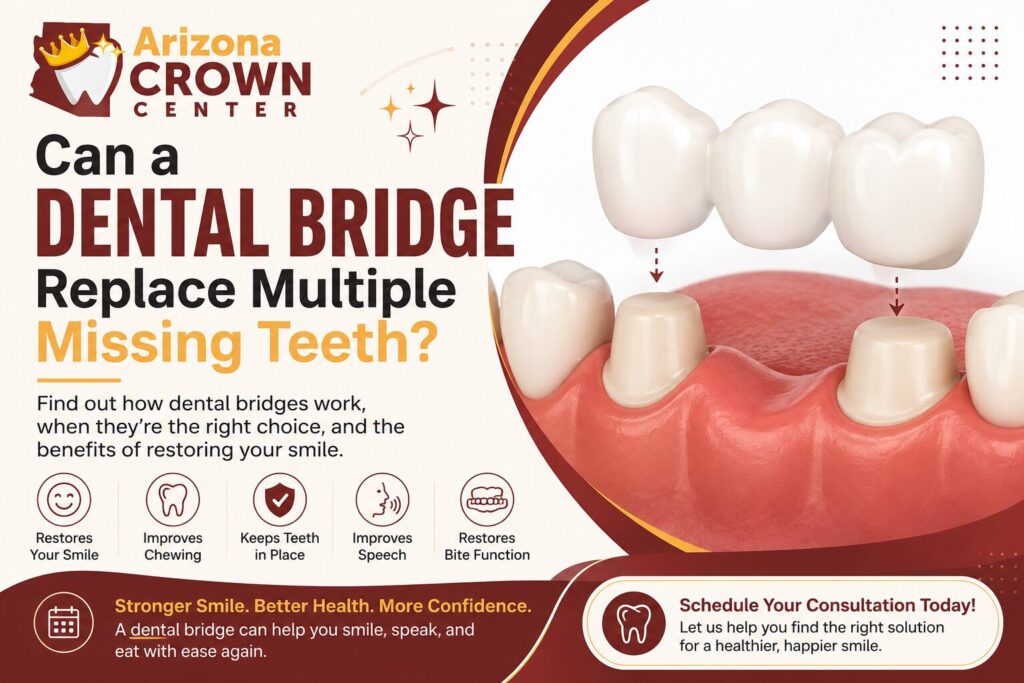
Can a Dental Bridge Replace Multiple Missing Teeth?
Losing more than one tooth can make everyday activities like eating, speaking, and smiling more difficult. It can also affect your confidence and your overall oral health. The good news is that modern dentistry offers several ways to replace missing teeth, and one of the most common options is a dental bridge.
But can a dental bridge replace multiple missing teeth? The answer is yes, in many cases. However, the right treatment depends on the number of missing teeth, their location, and the health of your remaining teeth and gums.
In this blog, we’ll explain how dental bridges work, when they’re a good option, and what you should know before choosing this treatment.
What Is a Dental Bridge?
A dental bridge is a fixed dental restoration that fills the gap left by one or more missing teeth. It includes one or more artificial teeth, called pontics, that are supported by the natural teeth or dental implants on either side of the gap.
Unlike removable dentures, a dental bridge stays in place and functions much like your natural teeth. It helps restore your smile, improves chewing ability, and keeps nearby teeth from shifting out of position.
Can a Dental Bridge Replace Multiple Missing Teeth?
Yes, a dental bridge can replace multiple missing teeth if the surrounding teeth or dental implants can provide enough support.
For example, if you have two or three missing teeth in a row, a bridge may be an effective solution. The artificial teeth are connected together and anchored to healthy supporting teeth or implants.
However, every case is different. If several teeth are missing or the gap is very large, your dentist may recommend another option, such as an implant-supported bridge or partial denture, to provide better long-term support.
When Is a Dental Bridge a Good Option?
A dental bridge may be recommended if:
- You have one or more missing teeth next to each other.
- The teeth on either side of the gap are healthy enough to support the bridge.
- Your gums are healthy.
- You want a fixed solution that does not need to be removed for cleaning.
- You’re looking for a reliable way to restore your smile and chewing function.
Your dentist will examine your mouth and take X-rays to determine whether a bridge is the best choice for your needs.
Benefits of Replacing Multiple Missing Teeth With a Dental Bridge
Restores Your Smile
A bridge fills the empty space left by missing teeth, helping your smile look complete and natural. Many people also feel more confident speaking and smiling after treatment.
Makes Chewing Easier
Missing teeth can make it difficult to chew certain foods. A dental bridge helps distribute chewing pressure more evenly, making it easier to enjoy a balanced diet.
Helps Keep Teeth in Place
When a tooth is missing, nearby teeth may slowly shift into the empty space. A bridge helps maintain proper tooth alignment and supports a healthy bite.
Improves Speech
Your teeth help you pronounce many sounds correctly. Replacing missing teeth can improve speech clarity, especially if the missing teeth are near the front of your mouth.
Restores Bite Function
A balanced bite helps protect your remaining teeth from uneven pressure and excessive wear. A dental bridge can restore the way your upper and lower teeth fit together.
Are There Any Limitations?
While dental bridges offer many benefits, they are not the right solution for every patient.
A bridge depends on strong supporting teeth or implants. If these teeth are weak, damaged, or affected by gum disease, additional treatment may be needed first.
It’s also important to know that a traditional bridge replaces the visible part of the tooth but not the root. Unlike dental implants, it does not stimulate the jawbone, so bone loss may continue in the area over time.
If multiple teeth are missing across a large section of the mouth, your dentist may recommend an implant-supported bridge or another tooth replacement option.
Dental Bridge vs. Dental Implant
Both dental bridges and dental implants are effective ways to replace missing teeth, but they work differently.
A dental bridge is often a good choice when healthy neighboring teeth are available to support it. Treatment is usually completed in fewer visits and may cost less than implants.
Dental implants replace both the tooth root and the visible tooth. They help maintain jawbone health and do not rely on neighboring teeth for support. However, implants require sufficient bone and typically involve a longer treatment process.
The best option depends on your oral health, treatment goals, and budget. Your dentist can help you decide which solution is right for you.
How Long Does a Dental Bridge Last?
With proper care, many dental bridges last 10 to 15 years or longer. Their lifespan depends on several factors, including your oral hygiene, eating habits, and regular dental checkups.
To help your bridge last as long as possible:
- Brush your teeth twice a day.
- Floss daily using tools recommended by your dentist.
- Avoid chewing hard objects like ice or pens.
- Visit your dentist regularly for cleanings and exams.
- Follow your dentist’s care instructions.
Good daily habits can help protect both your bridge and your remaining natural teeth.
Frequently Asked Questions
Can one dental bridge replace three missing teeth?
Yes. In many cases, a dental bridge can replace three missing teeth if the supporting teeth or implants are healthy enough.
Is a dental bridge removable?
No. A traditional dental bridge is fixed in place and can only be removed by a dentist.
Does getting a dental bridge hurt?
The procedure is generally comfortable because the area is numbed before treatment. Some mild sensitivity afterward is normal and usually temporary.
Final Thoughts
A dental bridge can be an excellent solution for replacing multiple missing teeth. It restores your smile, improves chewing, supports proper tooth alignment, and helps you speak with confidence. While it may not be the best option for every situation, it is a reliable treatment for many patients.
The best way to know if a dental bridge is right for you is to schedule a dental consultation. Your dentist will evaluate your oral health, discuss your goals, and recommend the treatment that best fits your needs.