
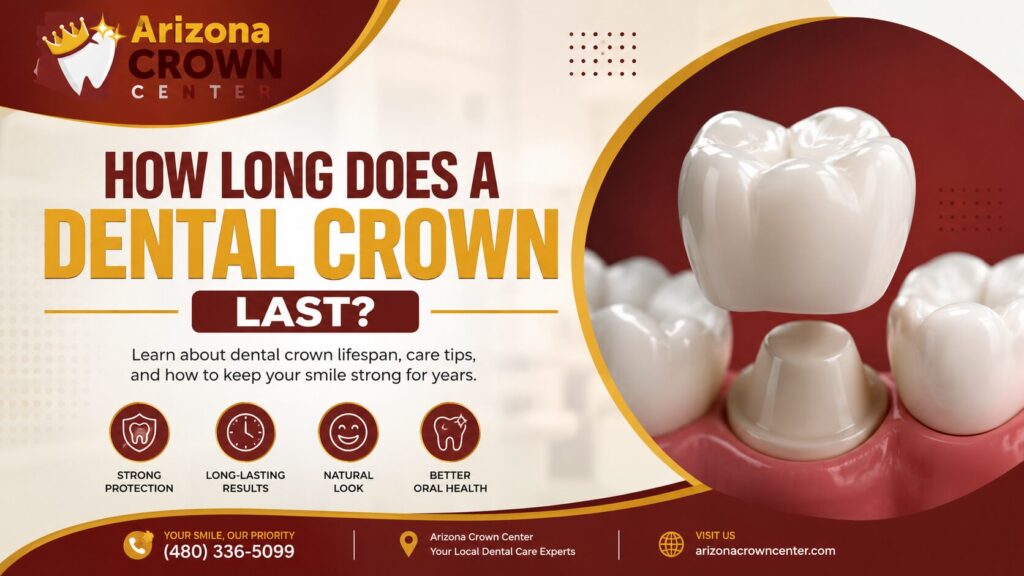
How Long Does a Dental Crown Last? Tips to Extend Its Lifespan
A dental crown is one of the most common treatments used to protect and restore a damaged tooth. It helps strengthen a weak tooth, improve its appearance, and restore normal chewing function.
Many patients ask, “How long does a dental crown last?” The answer depends on several factors, including the type of crown, your oral hygiene habits, bite pressure, and how well you care for your teeth.
With proper care and regular dental visits, a dental crown can last many years and continue protecting your natural tooth.
How Long Does a Dental Crown Usually Last?
On average, a dental crown can last about 10 to 15 years with proper care. Some crowns may last even longer, depending on the material used and the patient’s oral health.
According to dental experts, crowns are designed to be long-lasting, but they are not permanent. Over time, normal chewing forces, wear and tear, or changes in the tooth underneath may affect the crown’s condition.
The lifespan of a crown can vary based on:
- The type of dental crown material
- Your brushing and flossing habits
- Your diet and lifestyle
- Teeth grinding or jaw clenching
- The quality of crown placement
- Regular dental checkups
How Long Do Different Types of Dental Crowns Last?
Different crown materials have different levels of durability.
Porcelain Crowns
Porcelain crowns are popular because they closely match the natural color of teeth. They provide excellent aesthetics but may require careful maintenance because they can be more prone to chipping compared with stronger materials.
Zirconia Crowns
Zirconia crowns are known for their strength and durability. They are often recommended for back teeth because they can handle strong chewing pressure.
Porcelain-Fused-to-Metal (PFM) Crowns
PFM crowns combine the strength of metal with the natural appearance of porcelain. They have been used successfully for many years and can provide reliable results.
Metal Crowns
Metal crowns are extremely durable and can handle heavy chewing forces. However, many patients choose other materials because metal crowns do not look like natural teeth.
Factors That Affect How Long a Dental Crown Lasts
A dental crown’s lifespan depends not only on the crown itself but also on how you care for your teeth.
1. Good Oral Hygiene
Keeping your teeth clean is one of the most important ways to protect your crown. Bacteria and plaque can build up around the crown edges and may lead to tooth decay.
To maintain good oral health:
- Brush your teeth twice every day
- Floss daily around the crown area
- Use dental products recommended by your dentist
2. Avoiding Hard and Sticky Foods
Although crowns are strong, they are not indestructible. Chewing very hard foods can put extra pressure on your crown and increase the risk of damage.
Try to avoid:
- Ice chewing
- Hard candies
- Very sticky foods
- Biting hard objects
3. Teeth Grinding and Jaw Clenching
Some people grind or clench their teeth while sleeping. This condition, called bruxism, can put excessive pressure on dental crowns.
If you grind your teeth, your dentist may recommend a night guard to help protect your crown and natural teeth.
4. Regular Dental Checkups
Routine dental visits allow your dentist to check your crown, gums, and the tooth underneath.
Early detection of problems can help prevent bigger issues and may extend the life of your dental crown.
Signs Your Dental Crown May Need Replacement
Dental crowns do not always fail suddenly. In many cases, your mouth may show warning signs that your crown needs attention.
Pain or Sensitivity
If you experience ongoing pain, discomfort, or sensitivity around your crowned tooth, it may indicate a problem with the crown or the tooth underneath.
Cracks or Chips
Visible cracks, chips, or damage to the crown may affect its ability to protect your tooth.
A Loose Crown
A crown that feels loose or moves when you bite should be checked by a dentist. A loose crown may allow bacteria to enter and cause decay.
Gum Problems Around the Crown
Swelling, redness, or bleeding around the crown area may be a sign of gum irritation or infection.
Tooth Decay Under the Crown
Although a crown covers your tooth, it does not make the tooth completely immune to decay. If bacteria enter around the crown edges, cavities can still develop underneath.
Tips to Extend the Lifespan of Your Dental Crown
Taking care of your crown can help it last longer and protect your natural tooth.
Maintain a Daily Oral Care Routine
A simple oral care routine can make a big difference:
- Brush twice daily with fluoride toothpaste
- Floss carefully around the crown
- Keep your gums healthy
Choose Crown-Friendly Foods
A balanced diet supports overall oral health. Avoid excessive sugary foods and drinks because they can increase the risk of cavities around the crown.
Protect Your Teeth During Sports
If you participate in contact sports, wearing a mouthguard can help protect your crown from injury.
Do Not Use Your Teeth as Tools
Avoid using your teeth to open packages, cut objects, or hold items. These habits can damage both crowns and natural teeth.
Can a Dental Crown Last 20 Years?
Yes, some dental crowns can last 20 years or longer when they receive excellent care. However, not every crown will last that long.
Factors that improve the chances of a longer-lasting crown include:
- Good oral hygiene
- Healthy gums
- Proper crown placement
- Avoiding excessive pressure on the crown
- Regular dental visits
Your dentist can evaluate your crown’s condition during routine examinations and let you know if it is still providing proper protection.
What Happens If a Dental Crown Is Not Replaced?
Ignoring a damaged or failing crown may lead to more serious dental problems.
A worn or damaged crown can increase the risk of:
- Tooth decay
- Tooth sensitivity
- Pain while chewing
- Damage to the natural tooth
- More complex dental treatments
Replacing a crown when recommended by your dentist can help protect your tooth and prevent further complications.
When Should You Contact a Dentist About Your Crown?
You should schedule a dental appointment if you notice:
- Your crown feels loose
- Pain when biting or chewing
- Increased sensitivity
- Cracks or chips
- Swelling around the crown
- Changes in how your teeth fit together
Getting professional advice early can help protect your oral health and prevent bigger problems.
Frequently Asked Questions About Dental Crown Lifespan
How many years does a dental crown usually last?
Most dental crowns last around 10 to 15 years with proper care. Some may last longer depending on the material and oral hygiene habits.
Can a dental crown last forever?
No. Dental crowns are durable but not permanent. Over time, they may need replacement due to normal wear, damage, or changes in the tooth underneath.
How can I make my dental crown last longer?
You can extend your crown’s lifespan by brushing and flossing regularly, avoiding hard foods, wearing a night guard if needed, and visiting your dentist regularly.
Can cavities develop under a dental crown?
Yes. While crowns protect teeth, decay can still occur if bacteria enter around the crown edges.
Should I replace my crown if it does not hurt?
Not always. Some crowns may need replacement before causing pain. Regular dental checkups help identify problems early.
Conclusion
A dental crown is a reliable way to restore and protect a damaged tooth. While most crowns last around 10 to 15 years, proper care can help them stay strong for much longer.
Maintaining good oral hygiene, avoiding habits that damage your crown, and visiting your dentist regularly are the best ways to protect your investment and keep your smile healthy.