
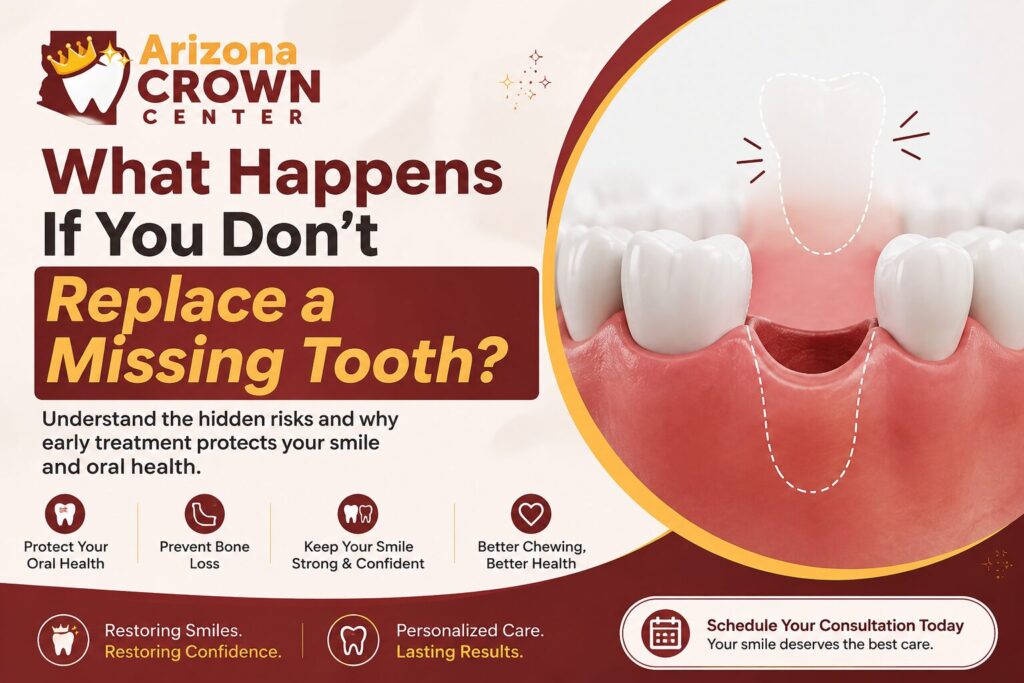
What Happens If You Don’t Replace a Missing Tooth?
Losing a tooth may not seem like a big problem, especially if it’s in the back of your mouth and isn’t easy to see. You might still be able to eat, talk, and smile without much trouble. However, leaving a missing tooth untreated can lead to several oral health problems over time.
Your teeth are designed to work together. When one tooth is missing, the surrounding teeth, gums, and jawbone begin to adjust. These changes can affect how you chew, speak, and even how your smile looks. The good news is that replacing a missing tooth early can help protect your oral health and prevent more complex dental problems in the future.
In this blog, we’ll explain what happens if you don’t replace a missing tooth, why it matters, and the treatment options that can restore your smile.
Why Replacing a Missing Tooth Matters
Every tooth has an important job. Together, your teeth help you chew food properly, speak clearly, and keep your bite balanced. They also provide support for your jawbone and facial structure.
When a tooth is lost, it’s not just the empty space that becomes a concern. The surrounding teeth and jawbone also begin to change. Replacing a missing tooth helps maintain your oral health, keeps your bite aligned, and restores normal function.
What Happens If You Don’t Replace a Missing Tooth?
Nearby Teeth May Shift Out of Place
Your teeth naturally support each other. When one tooth is missing, the neighboring teeth can slowly move into the empty space. This shifting may create gaps, crowding, or a misaligned bite.
As your teeth move, brushing and flossing can become more difficult. Food and plaque may collect in hard-to-reach areas, increasing the risk of cavities and gum disease.
Jawbone Loss Can Occur
The roots of your teeth stimulate your jawbone every time you bite and chew. Once a tooth is missing, that area no longer receives regular stimulation.
Over time, the jawbone may begin to shrink because it is no longer being used in the same way. Bone loss can affect the shape of your jaw and make future tooth replacement more challenging. Dental implants are often recommended because they help stimulate the jawbone like a natural tooth root.
Chewing Becomes More Difficult
Even one missing tooth can change the way you chew. You may start chewing on one side of your mouth, which places extra pressure on your remaining teeth.
Some foods may become uncomfortable to eat, causing you to avoid healthy options such as fruits, vegetables, or nuts. Poor chewing can also make digestion less efficient because food is not broken down properly before swallowing.
Your Bite Can Become Unbalanced
When teeth shift and chewing patterns change, your bite may no longer fit together correctly.
An uneven bite can place extra stress on certain teeth, causing them to wear down faster. Some people may also experience jaw discomfort or muscle fatigue when chewing.
Your Smile and Facial Appearance May Change
Missing teeth can affect your confidence, especially if the gap is visible when you smile or speak.
If bone loss continues over time, it may also reduce the natural support for your cheeks and lips. This can make the face appear older than it actually is.
Speech May Be Affected
Your teeth play an important role in pronouncing certain words and sounds. Missing front teeth, in particular, can make it more difficult to pronounce letters such as “F,” “V,” “S,” and “TH.”
While some people adjust over time, others may continue to notice changes in their speech.
Does It Matter Which Tooth Is Missing?
Yes. The effects depend on the location of the missing tooth.
A missing front tooth usually has the greatest impact on appearance and speech. A missing back tooth may not be visible, but it can reduce chewing ability and place extra pressure on nearby teeth. Losing multiple teeth increases the risk of bite problems, bone loss, and difficulty eating comfortably.
No matter which tooth is missing, it’s best to discuss replacement options with your dentist.
How Soon Should You Replace a Missing Tooth?
In many cases, replacing a missing tooth sooner is better than waiting. Early treatment can help prevent nearby teeth from shifting and reduce the amount of bone loss that may occur over time.
However, every patient is different. Your dentist will evaluate your oral health, jawbone condition, and overall treatment goals before recommending the best option.
Tooth Replacement Options
Modern dentistry offers several effective ways to replace a missing tooth.
Dental Implants are designed to replace both the tooth root and the visible tooth. They provide excellent stability and help maintain jawbone health.
Dental Bridges fill the gap by attaching an artificial tooth to the neighboring teeth. They restore chewing function and improve appearance.
Partial Dentures are removable appliances that replace one or more missing teeth. They are often a cost-effective solution for many patients.
Your dentist will recommend the most suitable treatment based on your oral health, budget, and personal preferences.
How to Help Prevent Tooth Loss
Although accidents can happen, many cases of tooth loss are preventable.
You can protect your smile by:
- Brushing twice a day with fluoride toothpaste.
- Flossing every day.
- Visiting your dentist for regular checkups and cleanings.
- Treating cavities and gum disease as early as possible.
- Wearing a mouthguard during contact sports.
- Avoiding tobacco products, which increase the risk of gum disease.
Healthy daily habits are one of the best ways to keep your natural teeth for life.
Frequently Asked Questions
Can I leave a missing tooth untreated?
While it may not cause immediate pain, leaving a missing tooth untreated can lead to shifting teeth, bone loss, and bite problems over time.
What is the best way to replace a missing tooth?
The best treatment depends on your oral health and individual needs. Dental implants, bridges, and partial dentures are all common options.
Will my other teeth move if I don’t replace a missing tooth?
Yes. Nearby teeth may gradually shift into the empty space, which can affect your bite and make cleaning more difficult.
Final Thoughts
A missing tooth is more than a cosmetic concern. Over time, it can affect your bite, chewing ability, jawbone, and overall oral health. The sooner you replace a missing tooth, the better your chances of preventing future dental problems.
If you’ve recently lost a tooth or have been living with a gap in your smile, schedule a dental consultation to learn about the treatment options that are right for you. Early care can help protect your smile and support your long-term oral health.