
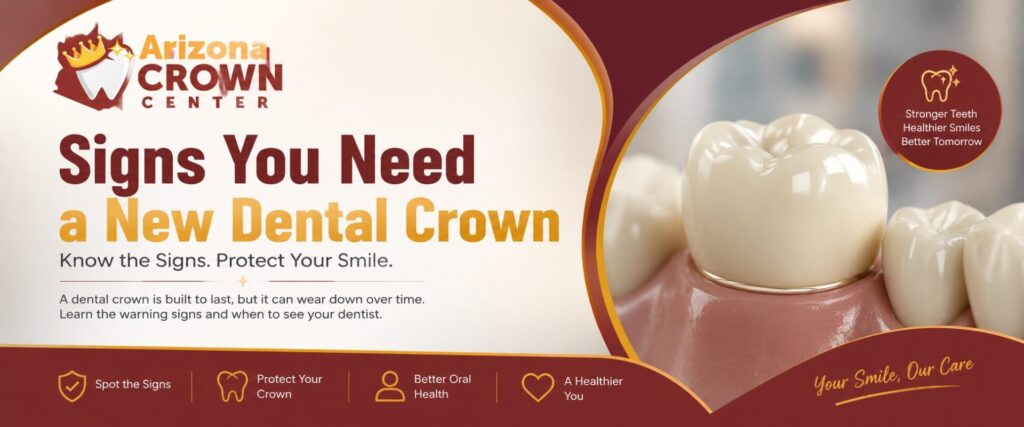
Signs You May Need a New Dental Crown: When to See Your Dentist
A dental crown is a strong and reliable restoration that helps protect a damaged or weakened tooth. It covers the visible part of the tooth and restores its strength, shape, and function. Many people enjoy years of comfortable chewing after getting a crown.
However, dental crowns are not designed to last forever. Over time, normal chewing pressure, changes in your oral health, tooth decay, or damage can affect how well a crown works.
Knowing the signs of a failing dental crown can help you visit your dentist at the right time and prevent bigger dental problems.
How Long Does a Dental Crown Usually Last?
A dental crown can often last between 10 and 15 years with proper care. Some crowns may last even longer depending on the crown material, your oral hygiene habits, bite pressure, and regular dental care.
Even though crowns are made from durable materials, they can experience wear and damage over time.
Factors that may shorten the lifespan of a dental crown include:
- Poor brushing and flossing habits
- Teeth grinding or jaw clenching
- Eating very hard foods
- Injury or trauma to the mouth
- Tooth decay around or under the crown
- Lack of regular dental checkups
Regular dental visits allow your dentist to monitor your crown and identify problems before they become serious.
Signs You May Need a New Dental Crown
1. Your Dental Crown Feels Loose
One of the most common signs that a crown needs attention is feeling movement or looseness when you bite or touch it.
A loose crown may happen because the dental cement holding it in place has weakened or because changes have occurred in the tooth underneath.
A loose crown should not be ignored because gaps can allow bacteria to enter, increasing the risk of tooth decay or infection.
2. You Experience Pain or Sensitivity Around the Crown
Some mild sensitivity may occur shortly after getting a crown, but ongoing pain or discomfort is a reason to contact your dentist.
You may notice:
- Pain when chewing
- Sensitivity to hot or cold foods
- Pressure discomfort
- Throbbing pain around the crowned tooth
These symptoms may indicate problems such as tooth decay, an infection, or issues with the fit of the crown.
3. Your Crown Has Cracks or Chips
Dental crowns are designed to handle normal chewing forces, but they can still crack or chip.
A damaged crown may no longer provide complete protection for your natural tooth.
Common causes of crown damage include:
- Biting hard objects
- Teeth grinding
- Accidental injuries
- Normal wear over many years
If you notice visible cracks, chips, or rough edges, schedule a dental appointment for an evaluation.
4. Tooth Decay Develops Under the Crown
A common misunderstanding is that a crown completely prevents cavities. While a crown protects the tooth, the natural tooth underneath can still develop decay.
Decay may occur if bacteria enter around the edges of the crown.
Signs of possible decay include:
- Tooth sensitivity
- Pain
- Bad taste near the crown
- Dark areas around the crown edge
Your dentist can use an examination and dental X-rays to check the health of the tooth underneath.
5. Your Bite Feels Different
A dental crown should feel natural when you bite and chew. If your bite feels different after some time, your crown may need to be checked.
You may notice:
- Your crowned tooth feels higher than other teeth
- Difficulty chewing comfortably
- Pressure on one specific tooth
Changes in your bite can create extra stress on the crown and surrounding teeth.
6. Your Gums Are Swollen or Irritated Around the Crown
Healthy gums should not be painful, swollen, or constantly bleeding around a dental crown.
Gum problems near a crown may occur because of:
- Plaque buildup
- Poor crown fit
- Food getting trapped
- Gum irritation
If you notice redness, swelling, or bleeding near your crown, it is best to consult your dentist.
7. Your Dental Crown Looks Worn or Damaged
Over time, crowns may show signs of aging. You may notice changes such as:
- Worn surfaces
- Discoloration
- A visible difference between the crown and natural teeth
- Damage around the edges
A cosmetic concern may not always mean the crown is failing, but your dentist can determine whether replacement is needed.
What Happens If You Ignore a Damaged Dental Crown?
Delaying treatment for a damaged crown can lead to more serious oral health problems.
Possible complications include:
Increased Tooth Decay Risk
A damaged or loose crown may allow bacteria to reach the natural tooth underneath, increasing the chance of cavities.
Tooth Infection
If decay reaches deeper parts of the tooth, it may cause infection and require additional treatment.
Damage to the Natural Tooth
A failing crown may no longer provide enough protection, which can weaken the tooth structure.
More Complex Dental Treatment
Ignoring crown problems may result in the need for procedures such as root canal treatment or tooth replacement.
How Does a Dentist Check If Your Crown Needs Replacement?
Your dentist will evaluate several things before deciding whether your crown needs to be replaced.
Visual Examination
The dentist checks for:
- Cracks
- Chips
- Crown fit
- Gum health
- Signs of wear
Dental X-Rays
X-rays help dentists check for problems that cannot be seen during a regular examination, including decay or changes under the crown.
Bite Evaluation
Your dentist may check how your teeth come together to make sure the crown is not creating extra pressure.
Can a Dental Crown Be Repaired Instead of Replaced?
In some cases, minor crown problems may be repaired. However, replacement may be necessary if the crown is:
- Severely cracked
- Loose repeatedly
- Worn down
- Causing problems with the tooth underneath
Your dentist will recommend the best option based on the condition of your crown and natural tooth.
How to Make Your New Dental Crown Last Longer
After getting a replacement crown, proper care can help extend its lifespan.
Maintain Good Oral Hygiene
Follow a consistent dental care routine:
- Brush twice daily
- Floss every day
- Clean around the crown carefully
- Keep your gums healthy
Avoid Hard Foods and Damaging Habits
Protect your crown by avoiding:
- Chewing ice
- Biting hard objects
- Opening packages with your teeth
Wear a Night Guard If You Grind Your Teeth
If you grind or clench your teeth while sleeping, a night guard can help reduce pressure on your crown.
Visit Your Dentist Regularly
Regular checkups allow your dentist to monitor your crown and identify early warning signs.
When Should You See Your Dentist About Your Dental Crown?
You should schedule a dental appointment if you experience:
- A loose crown
- Pain or sensitivity
- Cracks or chips
- Swollen gums
- Changes in your bite
- Difficulty chewing
- Signs of decay
Early treatment can help protect your tooth and prevent more expensive dental procedures in the future.
Frequently Asked Questions About Dental Crown Replacement
How do I know if my dental crown needs to be replaced?
A crown may need replacement if it becomes loose, cracked, painful, damaged, or if decay develops underneath it.
How often should a dental crown be replaced?
Most crowns last around 10 to 15 years, but replacement timing depends on the condition of the crown and your oral health.
Can a damaged dental crown cause pain?
Yes. A damaged crown can expose problems with the tooth underneath, causing sensitivity or pain.
Can cavities form under a dental crown?
Yes. While crowns protect teeth, decay can still develop around the crown edges if bacteria are present.
Is replacing a dental crown painful?
The procedure is usually performed with local anesthesia to keep you comfortable. Your dentist will explain each step before treatment.
Conclusion
Dental crowns are designed to protect and strengthen damaged teeth, but they require proper care and regular monitoring. Signs like a loose crown, pain, cracks, sensitivity, or gum problems should not be ignored.
If you notice any changes with your dental crown, visiting your dentist early can help prevent further damage and keep your smile healthy for years to come.